
What is the best way to treat scabies at home?
12 home remedies for scabies
Risk factors
Seeing a doctor
Takeaway
People with scabies need medical treatment to get rid of the mites, but home remedies — such as tea tree oil, neem, and clove oil — may help manage itching and discomfort.
Scabies is an infestation of small mites that burrow into the skin and cause itchy rashes.
People should always check with their doctor before trying home remedies for scabies. Also, some of the suggested remedies have no scientific or medical evidence to back them.
The most common symptoms of scabies include:
red and irritated skin
blistering
extreme itchiness, particularly in the evening or night
It is also possible that a person will notice:
tiny bites or bumps
trails where the mites burrowed into the skin
sores from scratching
12 home remedies for scabies
Anyone trying a home remedy for scabies should consult a doctor if the infestation does not clear up or show signs of improving.
1. Tea tree oil
Tea tree oil may help to relieve some of the symptoms of scabies.
Tea tree oil is a well-known essential oil. In some studiesTrusted Source, it has shown some promise as being effective in the treatment of scabies. Additional studies are still needed, however.
Tea tree oil can help alleviate some of the itchiness associated with scabies, in addition to other treatments.
The oil has not been found to be effective against the eggs that are buried deep within the skin.
Some people are allergic to tea tree oil. People who are allergic should not use tea tree oil for scabies and should find an alternative method.
2. Aloe vera
Aloe vera is well-known for its soothing effect on sunburn and other skin ailments. Aloe vera is usually considered safe to use with minimal side effects reported.
One small studyTrusted Source has shown that aloe vera is effective in treating scabies. It was, in fact, found to be as effective as a prescription drug called benzyl benzoate.
More research is required to fully test the effects of aloe vera in the treatment of scabies.
3. Neem
Neem is an oil. It can be found in creams and ointments. Neem has analgesic, antibacterial, and anti-inflammatory properties.
There have been some studies that suggest that neem is effective in treating scabies because it kills the mites.
One studyTrusted Source tested the effects of neem on dogs. Most of the dogs were cured of scabies within 2 weeks of consistently using shampoo that contained neem. The dogs that did not fully recover saw big improvements in the total number of mites left in their skin.
Additional studies on humans are needed to test neem’s effectiveness as a treatment for scabies in humans.
4. Clove oil
A single study showedTrusted Source that clove oil was effective in treating scabies in a group of rabbits and pigs. Other oils tested did not perform as well as clove oil.
Again, this is a case where additional studies need to be done to fully test whether or not clove oil is effective on scabies when the mites occur in humans.
5. Cayenne pepper
Capsaicin, found in cayenne peppers, is thought to help alleviate pain and itchiness.
Cayenne pepper has not been proven effective in treating scabies. Nevertheless, some people believe that it is an effective treatment against the mites.
Cayenne pepper does have some usefulness when it comes to scabies, despite some controversy.
According to one studyTrusted Source, capsaicin, a compound found in cayenne pepper, desensitizes the skin when it is applied directly. This can help alleviate some of the pain and itchiness associated with scabies.
Creams with capsaicin are available to purchase online. Speak to a doctor before using these products.
6. Turmeric
Little evidence supports the effectiveness of turmeric in treating scabies. However, some people claim that it is effective in alleviating the symptoms.
Treating the symptoms will not stop or cure the infestation, so other methods of treatment will still be required.
7. Zinc
Zinc is not a direct treatment for scabies. Instead, people recommend using zinc to help fight off secondary infections that may result from the open skin wounds that can result from a person scratching.
8. Wash clothes in hot water
Though not a direct treatment for the infection, an individual should wash any clothing, bedding, or other fabric that has come in contact with them or their skin if they have scabies. This will remove mites hiding in the fabric and help prevent them spreading to other areas of their body or other individuals.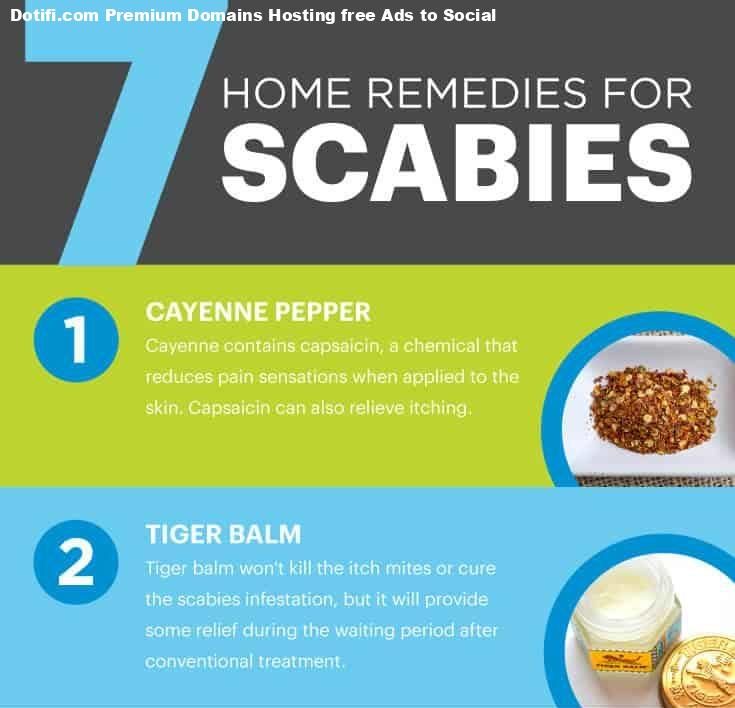
9. Borax
Borax or sodium borate is controversial at best. It is mostly used in household cleaning products, such as laundry washes.
Though some people claim it can help with scabies, others question it is safe to use for humans.
It should not be used directly on the skin, but it may be effective in a person’s laundry when trying to eliminate the scabies mites.
10. Bleach
Though it may kill the mites, bleach is a harsh chemical and should always be diluted and treated with great care.
It can also damage a person’s skin, eyes, and lungs. Again, it should only be used as a cleaning product and should not come into contact with the skin itself.
11. Vacuuming
Similarly to washing clothes, vacuuming the house will not cure the infestation that is affecting an individual. However, vacuuming up any mites that could be in floor coverings will help prevent scabies from spreading to other people.
12. Apple cider vinegar
Much has been written about apple cider vinegar, and some believe it may be effective in treating scabies. There is little evidence to back up the claims, however.
Risk factors
Scabies may be spread through sexual contact.
Scabies is highly contagious and can be spread through:
sexual contact
long periods of skin to skin contact
sharing clothes, sheets, and towels
Anyone in direct contact with someone who has scabies is at risk of developing an infestation. Sexual partners, friends, and family members are at high risk of developing the condition.
Crowded conditions are another risk factor. Some places scabies can quickly spread include:
schools
daycares
prisons
locker rooms
rehab facilities
nursing homes
When to see a doctor
A person should see their doctor when:
a rash of unknown origin develops
scabies-specific symptoms are noticed
contact occurs with someone who has scabies
a rash of unknown cause lasts longer than a week