Mon. May 25th, 2026
Spread the love
'The Milkmaid' Selected As Nigeria's Entry For 93rd Oscars
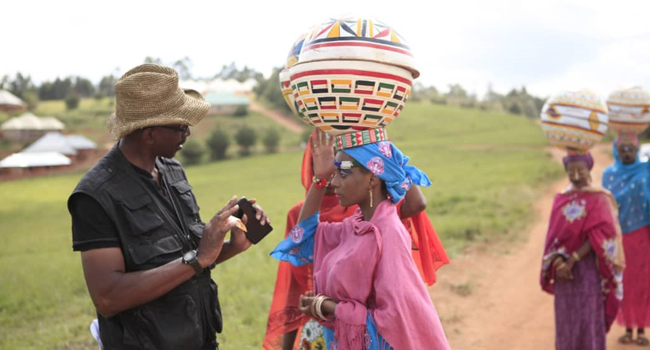
A scene from the production of the Milkmaid, which was selected as Nigeria’s choice for the 93rd Oscars


“The Milkmaid” is Nigeria’s official submission for the 93rd Academy Awards in the International Feature Film (IFF) category of the Oscars.

The Nigerian Official Selection Committee (NOSC) announced the selection on Tuesday.

The NOSC said it received several entries, out which six films – “Sanitation Day”, “Voiceless”, “Oloture”, “Ibi” (The Birth), “The Milkmaid” and “Eyimofe” – sailed through the first vetting exercise.

At the final stage, “The Milkmaid” scored overwhelming majority votes.

Written, produced and directed by Desmond Ovbiagele, “The Milkmaid” is a Hausa language-based thriller on insurgency, especially as it affects women and children in Sub-Saharan Africa. Inspired by the image on Nigeria’s 10 Naira note, the film tells the story of a Fulani milkmaid who confronts religious extremists in a rural African community, in a quest to locate her missing sister, and how efforts to recapture her disrupted past prove complicated.

The film was selected by the 12-man NOSC, having followed the prescribed procedures by the Academy, subject to further determination by the IFF Executive Committee.

“The Milkmaid” was voted by seven of nine voting-NOSC members. NOSC states that three members were considered ineligible, due to their affiliation with some of the films in competition, in line with the Academy’s rules. It describes the process of selection as intense, democratic, and a worthy development for the Nigerian film industry.

Shot on location in Taraba State, North-East Nigeria, “The Milkmaid” stars popular northern Nigerian actress, Maryam Booth, alongside Ibrahim Jammal, Anthonieta Kalunta, and Gambo Usman Kona among others. The film owes its other credits to New Jersey-based surgeon, Oluseun Sowemimo as Executive Producer, Yinka Edward for Cinematography, Chuka Ejorh for Editing, Pat Nebo for Production Design, and Hakeem Onilogbo for Special Effects.

Screened in cinemas in Nigeria, Cameroon, and Zimbabwe, “The Milkmaid” is an authentic and riveting Nigerian story with global relevance. It commands beautiful acting, ace directing, and great cinematography. The film is Ovbiagele’s sophomore, having written, produced and directed the award-winning “Render to Caesar” in 2014.

The 12-man NOSC is headed by, filmmaker and education administrator, Chineze Anyaene-Abonyi. Other members include filmmaker and Chairman of Audio-Visual Rights Society (AVRS) of Nigeria, Mahmood Ali-Balogun; Filmmaker/Talent Manager, Mildred Okwo; Filmmaker/Author, Charles Novia; veteran actress turned filmmaker, Ego Boyo; notable Director and Cinematographer, Adetokunbo ‘DJ Tee’ Odubawo; Theatre Practitioner and Head of Production for M-NET West Africa, Yibo Koko; Group Executive Director of Filmhouse Cinemas and Managing Director of FilmOne Entertainment, Moses Babatope; CEO of Legend Box Office, Bruce Ayonote; Filmmaker and Founder, In-Short Film Festival, Victor Okhai; notable actress and producer, Omoli Oboli and Journalist/Film Critic, Shaibu Husseini.

According to Anyaene-Abonyi, there is a significant improvement in the quality of films received this year. “The Academy’s approved parameters had to be diligently followed to select the country’s entry without prejudice. And I must say that the Nigerian film industry is awakened to the internationally acceptable requirements for film production, though there would always be room for improvement in order to increase our competitive outlook every year,” she said.

The 93rd edition of the Academy Awards is scheduled to hold on April 25th. Last year, Nigeria’s official submission, “Lionheart”, was disqualified for not meeting the non-English dialogue criteria, leading to the controversy on whether or not Nigerian pidgin should not be considered a local language. Although that rule has been reviewed, giving approval for dialogues in pidgin, “The Milkmaid”, shot with Hausa, Fulfulde and Arabic dialogues appears to have been made with the original Academy rules in mind and had not left anything to chance.

You missed

From Tramadol to Canadian to Exol-5 The New Drug Destroying Nigerian Youths An Investigative Article .From Tramadol to Canadian to Exol-5: The New Drug Destroying Nigerian Youths An Investigative Report on the Shifting Landscape of Substance Abuse in Nigeria Nigeria faces a severe and evolving drug crisis, particularly among its youth. What began with the widespread abuse of Tramadol has progressed through mixtures like “Canadian” to newer pharmaceutical diversions such as Exol-5. This shift reflects deeper issues: easy access to prescription drugs, weak regulation, socioeconomic pressures, and aggressive street-level marketing. NDLEA operations and health studies reveal a public health emergency that threatens an entire generation. Phase 1: The Tramadol Epidemic (2010s–Early 2020s) Tramadol, a synthetic opioid prescribed for moderate to severe pain, became Nigeria’s most notorious street drug. Cheap, potent, and widely smuggled (often from India and other Asian countries), it offered users energy, euphoria, and pain relief — appealing to commercial drivers, laborers, students, and young men seeking confidence or stamina. Scale of the Problem: Millions of tablets seized annually by NDLEA. High prevalence among young males aged 15–35. Linked to increased crime, sexual violence, organ damage (kidney failure, seizures), and mental health breakdowns. Contributed to broader opioid misuse alongside codeine cough syrups. Government responses included tighter import controls and public awareness campaigns, but these only displaced demand to other substances rather than eliminating it. Phase 2: The Rise of “Canadian” (Mid-2020s) “Canadian” or “Canadian Loud” emerged as a popular code for high-grade cannabis (often indica-dominant strains) or cannabis mixed with other synthetics. It gained traction as users sought alternatives or combinations to Tramadol’s effects. This phase marked a move toward imported or locally cultivated premium weed, sometimes laced with stronger chemicals. Youths in urban centers like Lagos, Kano, Jos, and Onitsha embraced it for its perceived “cleaner” high compared to opioids. However, it fueled polydrug use — combining cannabis with opioids, sedatives, or alcohol — amplifying health risks. Phase 3: Exol-5 – The Current Threat (2024–2026) Exol-5 (Benzhexol Hydrochloride / Trihexyphenidyl 5mg), originally a prescription medication for Parkinson’s disease and drug-induced movement disorders, has become the latest pharmaceutical being heavily abused. Why Exol-5? Euphoric Effects: Users report intense euphoria, hallucinations, and a sense of detachment — making it attractive as a cheap “upper” or escape. Accessibility: Sold over-the-counter or on the black market despite being a controlled prescription drug. NDLEA has seized millions of pills in single operations (e.g., 3.1 million pills in Kano in late 2024, and over 5.6 million combined with Tramadol in other busts). Street Names: Exol, Artane, Benzhexol, “Farin Mallam” (in Northern Nigeria). Demographics: Prevalent among youths, laborers, and even psychiatric patients who divert prescriptions. Studies show abuse rates as high as 25% among certain outpatient groups. Health Consequences: Anticholinergic toxicity: Confusion, dry mouth, blurred vision, urinary retention, constipation, and in high doses — delirium, psychosis, seizures, and heart issues. Long-term: Cognitive impairment, addiction, exacerbated mental health disorders. Often mixed with Tramadol, codeine, or cannabis, creating dangerous synergies. In cities like Jos, Exol-5 sits alongside diazepam, Rohypnol, and Tramadol on street markets, easily available to teenagers and young adults. Why This Evolution Continues Supply-Side Failures: Porous borders, corrupt officials, and overproduction of pharmaceuticals enable diversion. Demand Drivers: Unemployment, poverty, peer pressure, trauma, and the pursuit of performance enhancement (e.g., for “hustle” culture). Weak Regulation: Many pharmacies sell restricted drugs without prescriptions. Online and street vendors fill gaps. Displacement Effect: Cracking down on one substance (Tramadol/codeine) pushes users and dealers toward the next available option. NDLEA reports ongoing large seizures, but the problem persists due to high profitability and low risk for mid-level distributors. Broader Impacts on Nigerian Youths Education: Increased dropout rates and poor academic performance. Mental Health: Rising cases of psychosis and depression. Economy: Lost productivity among the working-age population. Crime and Violence: Drug-fueled robberies, cultism, and family breakdowns. Public Health System Strain: Overburdened hospitals treating overdoses and chronic complications. Young people aged 15–39 remain the hardest hit, with national surveys showing drug use prevalence significantly above global averages. What Must Be Done Stronger Enforcement: Consistent prosecution of corrupt enablers and large-scale traffickers. Regulation: Crackdown on rogue pharmacies and better tracking of prescription drugs. Prevention & Rehabilitation: School programs, community outreach, and expanded treatment centers (currently woefully inadequate). Economic Alternatives: Address root causes like youth unemployment. Public Awareness: Honest campaigns highlighting real dangers of “Exol-5” and similar drugs. Conclusion From Tramadol’s opioid grip to “Canadian” cannabis culture and now Exol-5’s anticholinergic highs, Nigeria’s drug crisis is mutating faster than responses can contain it. Exol-5 represents the dangerous new frontier — a legitimate medicine turned youth destroyer due to misuse and greed. Without urgent, multi-layered intervention — combining supply disruption, demand reduction, and socioeconomic support — an entire generation risks being lost to addiction. The time for half-measures is over. Nigeria’s future depends on winning this fight.